A tower the people kept
برجی که مردم آن را نگه داشتند
1966 — A 24-year-old's drawing
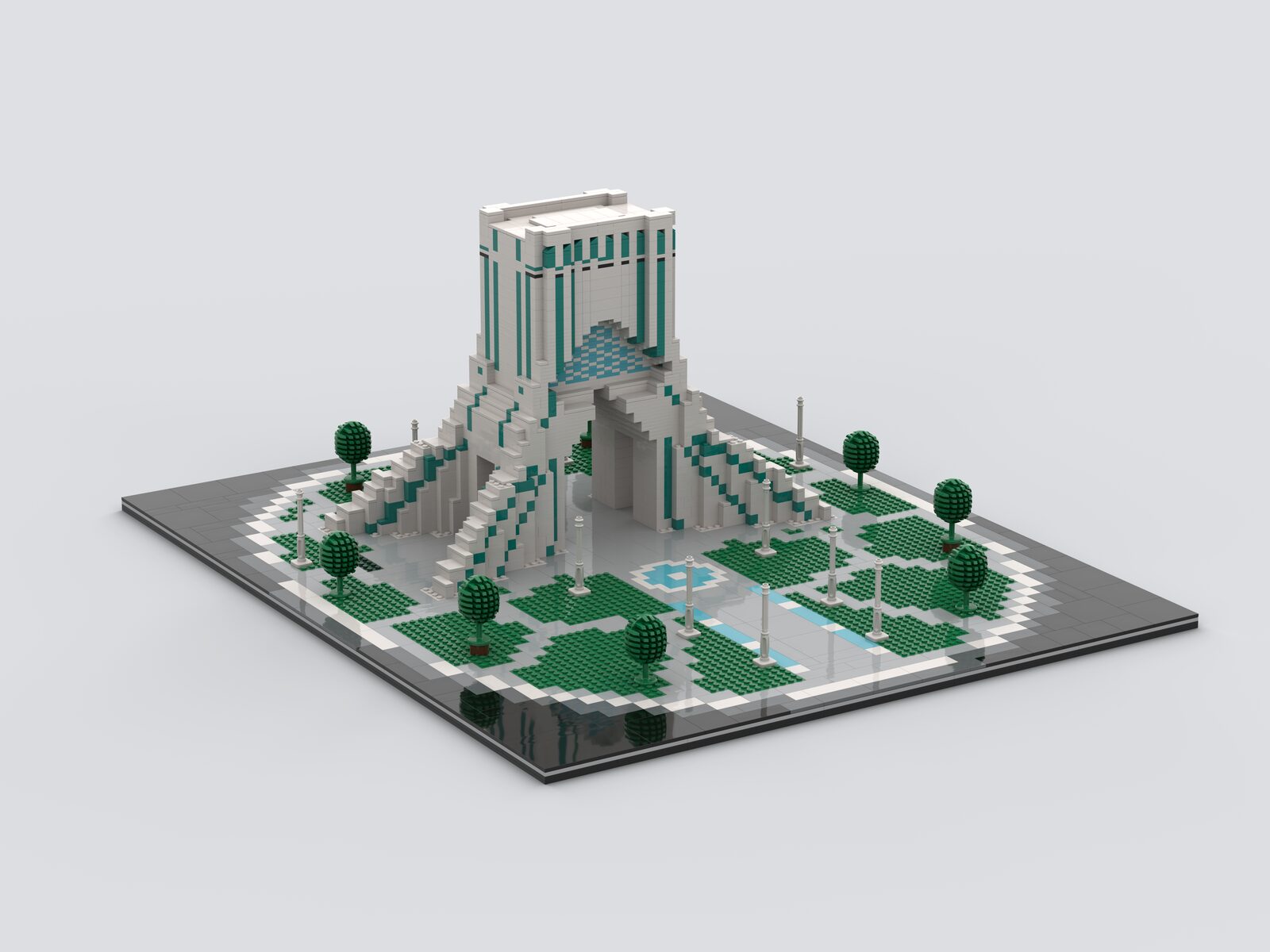
When Iran announced a national competition for a monument to stand at the gateway of its capital, the winning drawing came from Hossein Amanat — an architecture graduate just twenty-four years old. His idea was audacious: fold twenty-five centuries of Iranian building into a single silhouette.
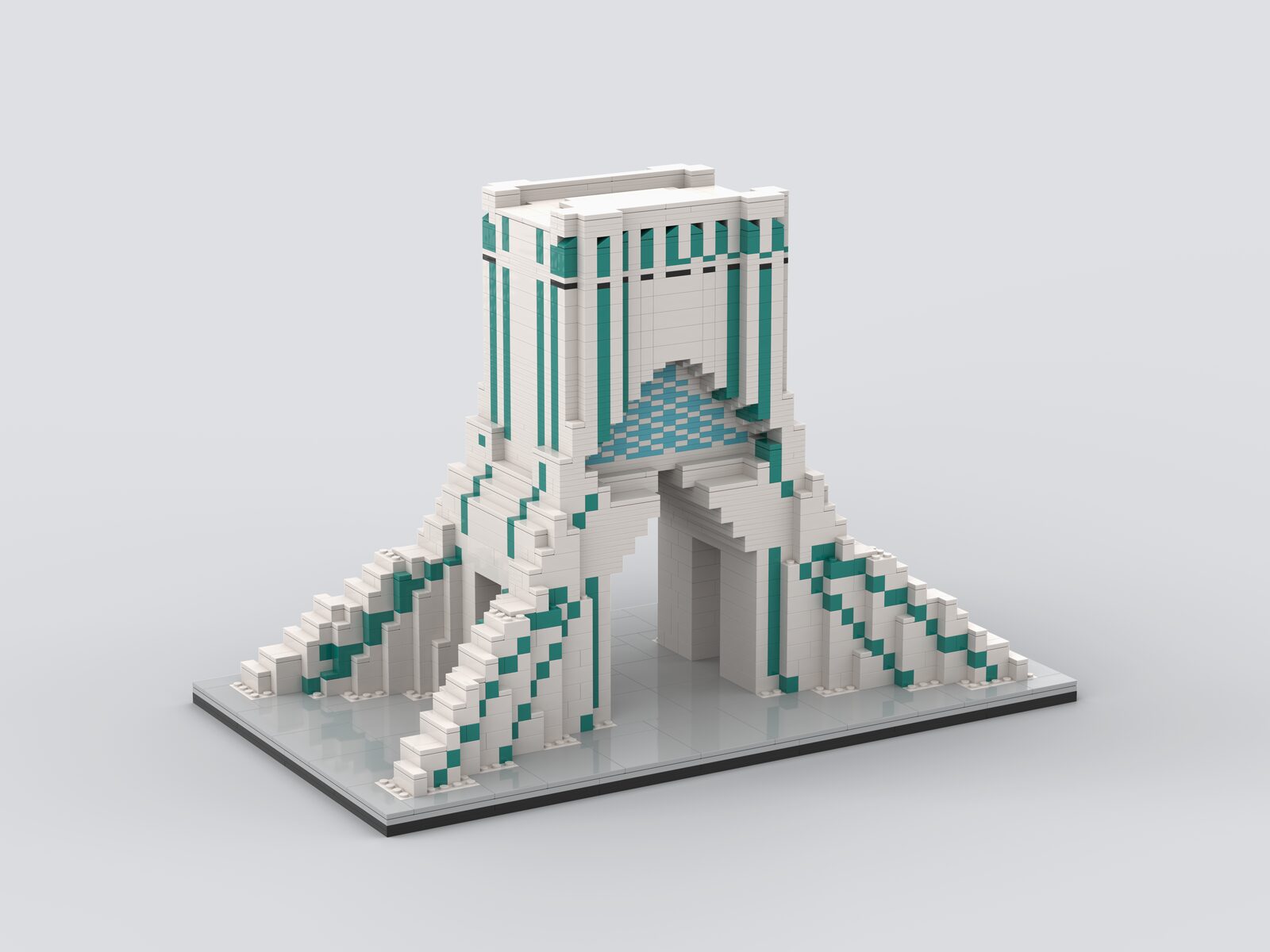
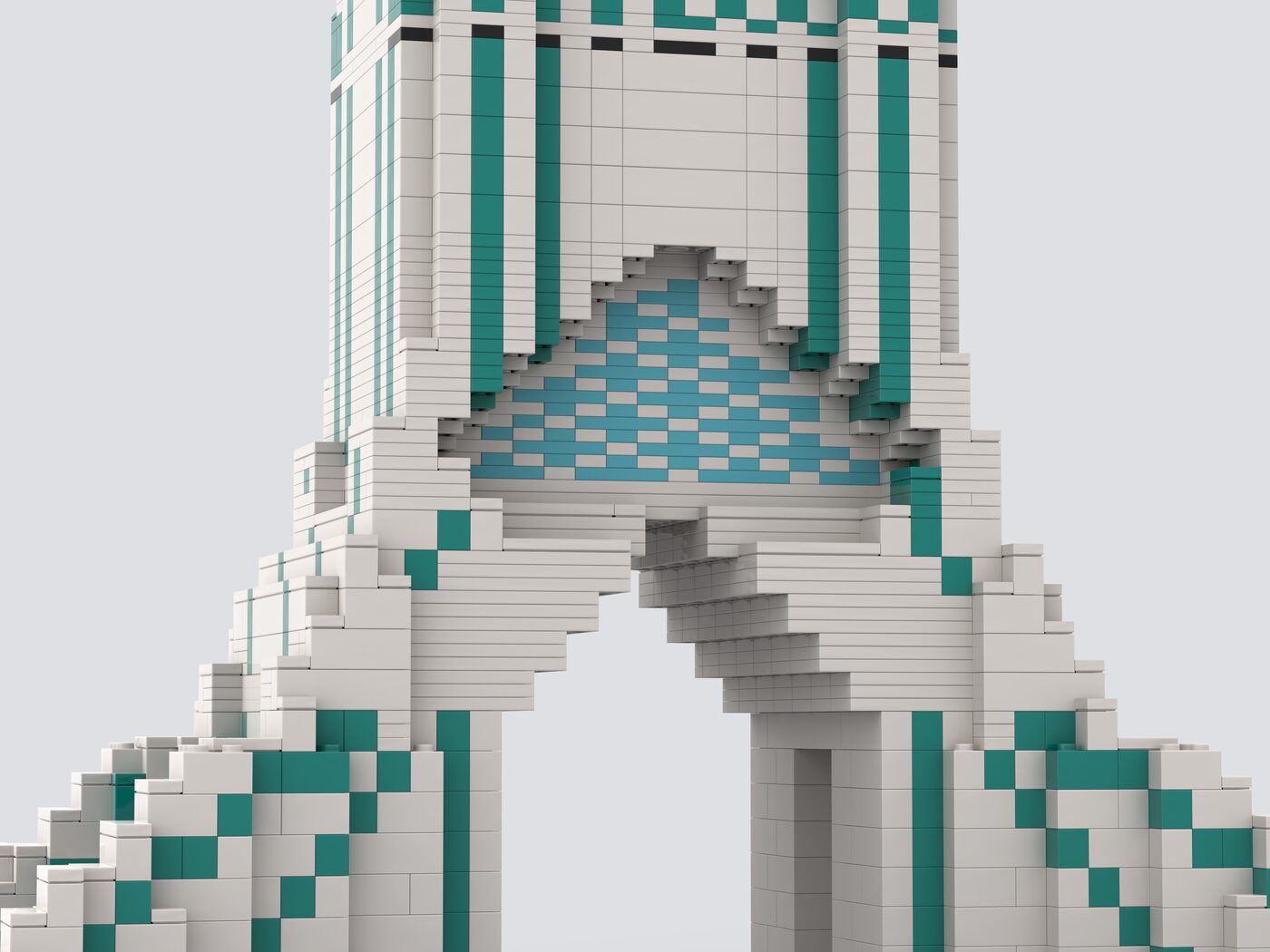
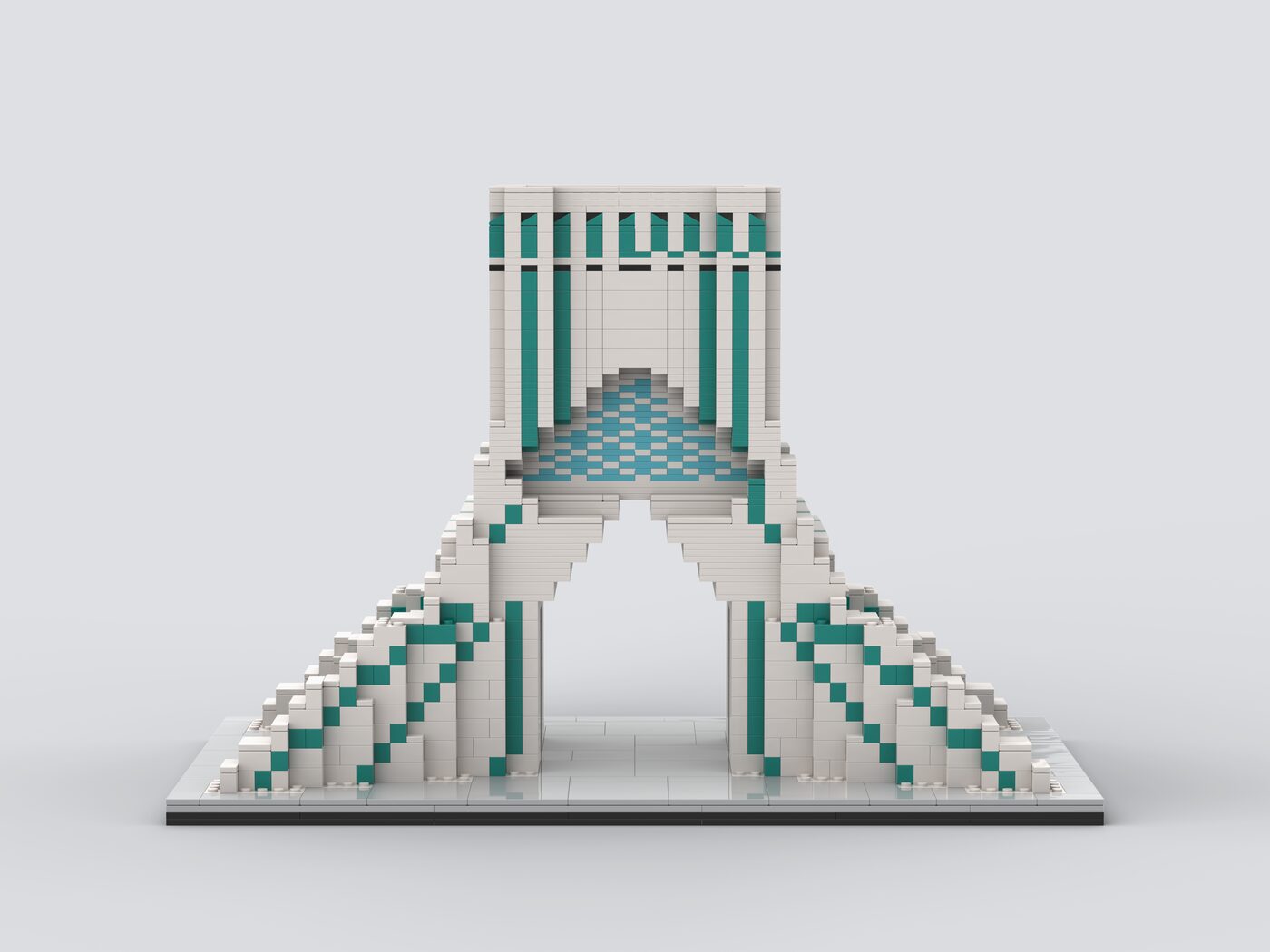
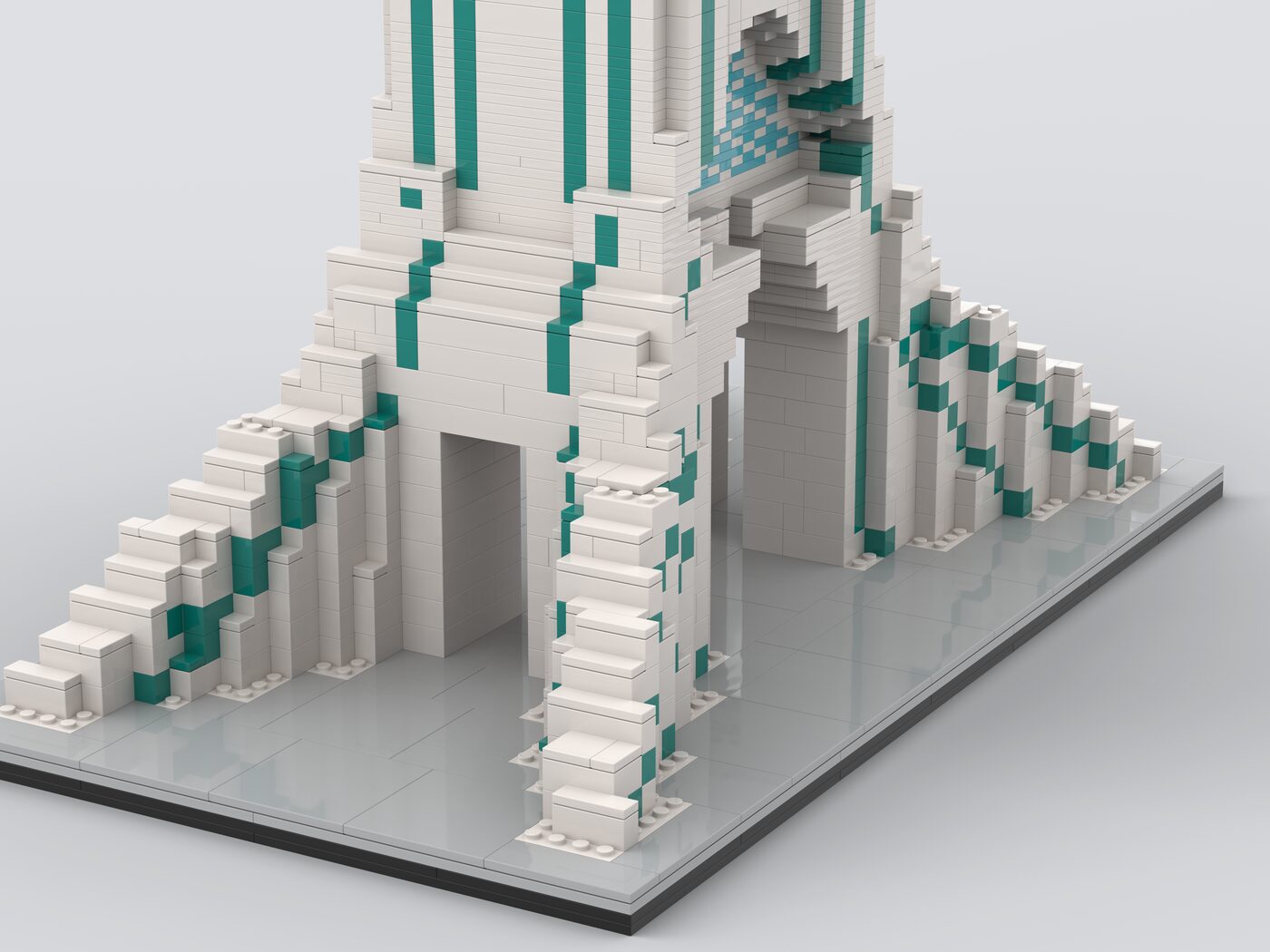
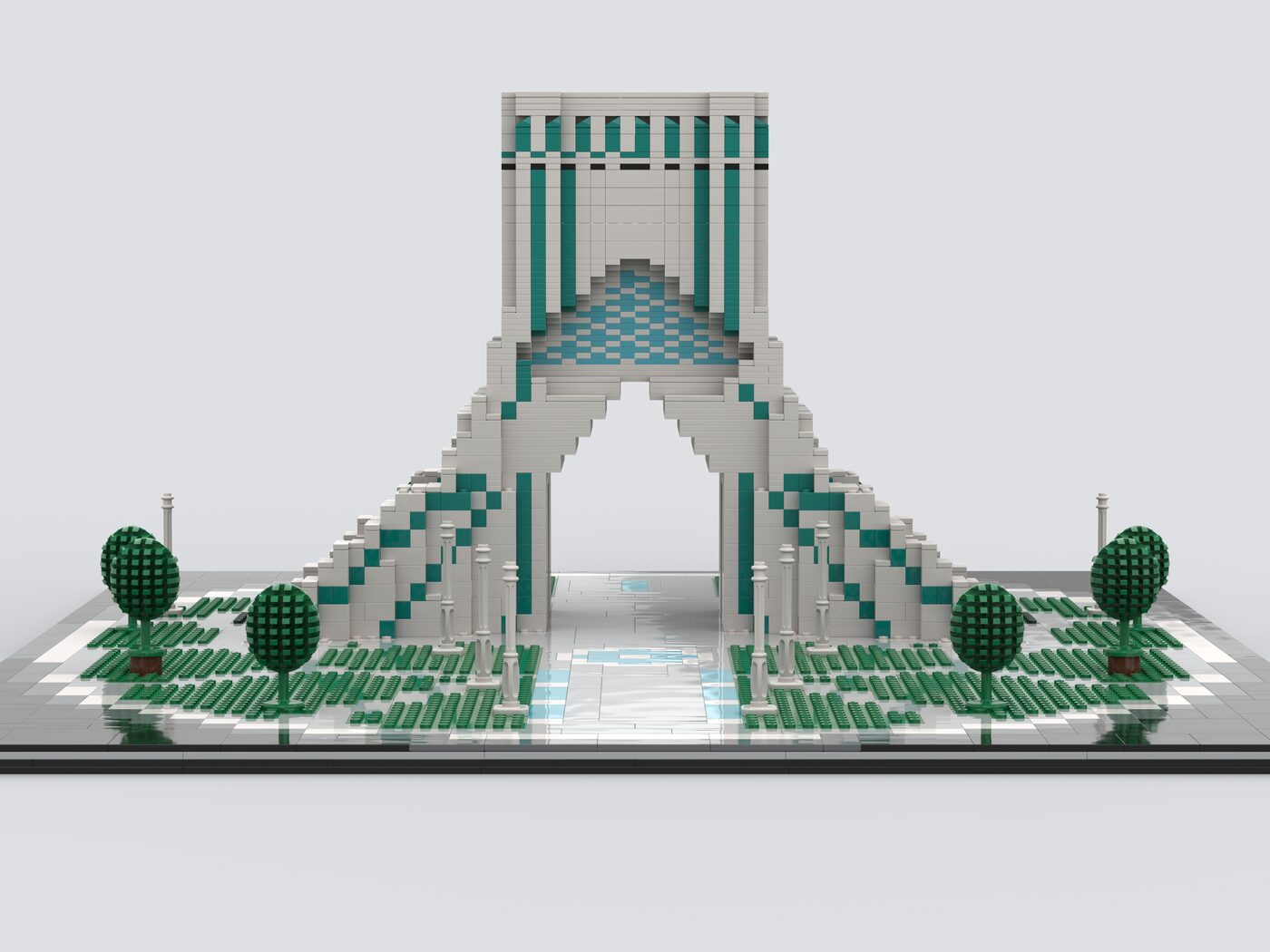
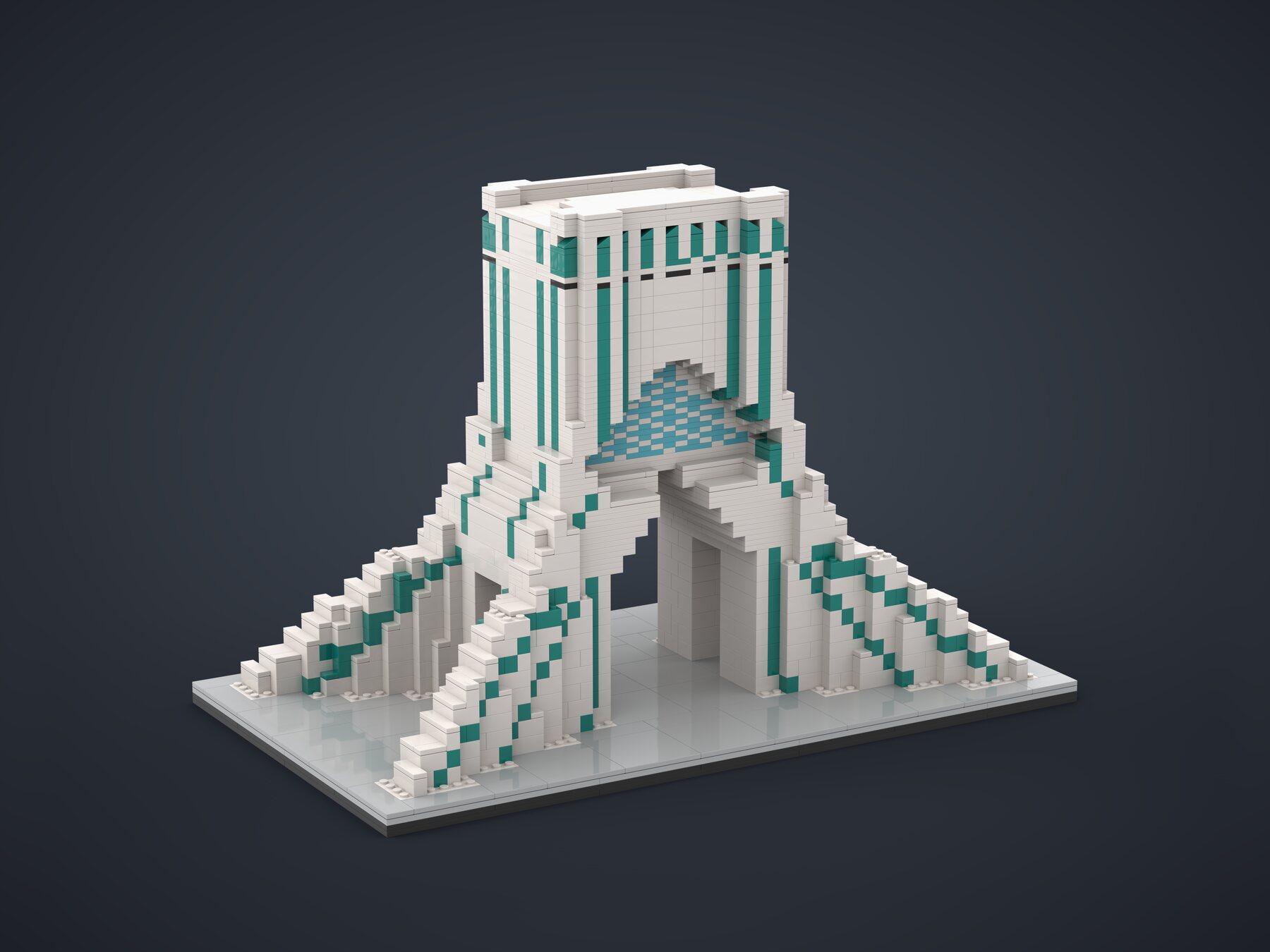
Look up through the main vault and you see it: the great elliptical arch of ancient Ctesiphon carrying a pointed Islamic arch above it, the two bridged by geometry drawn from Achaemenid Persepolis — and between them, ribbons of turquoise tile, the colour of every dome from Isfahan to Mashhad.
1971 — Shahyad
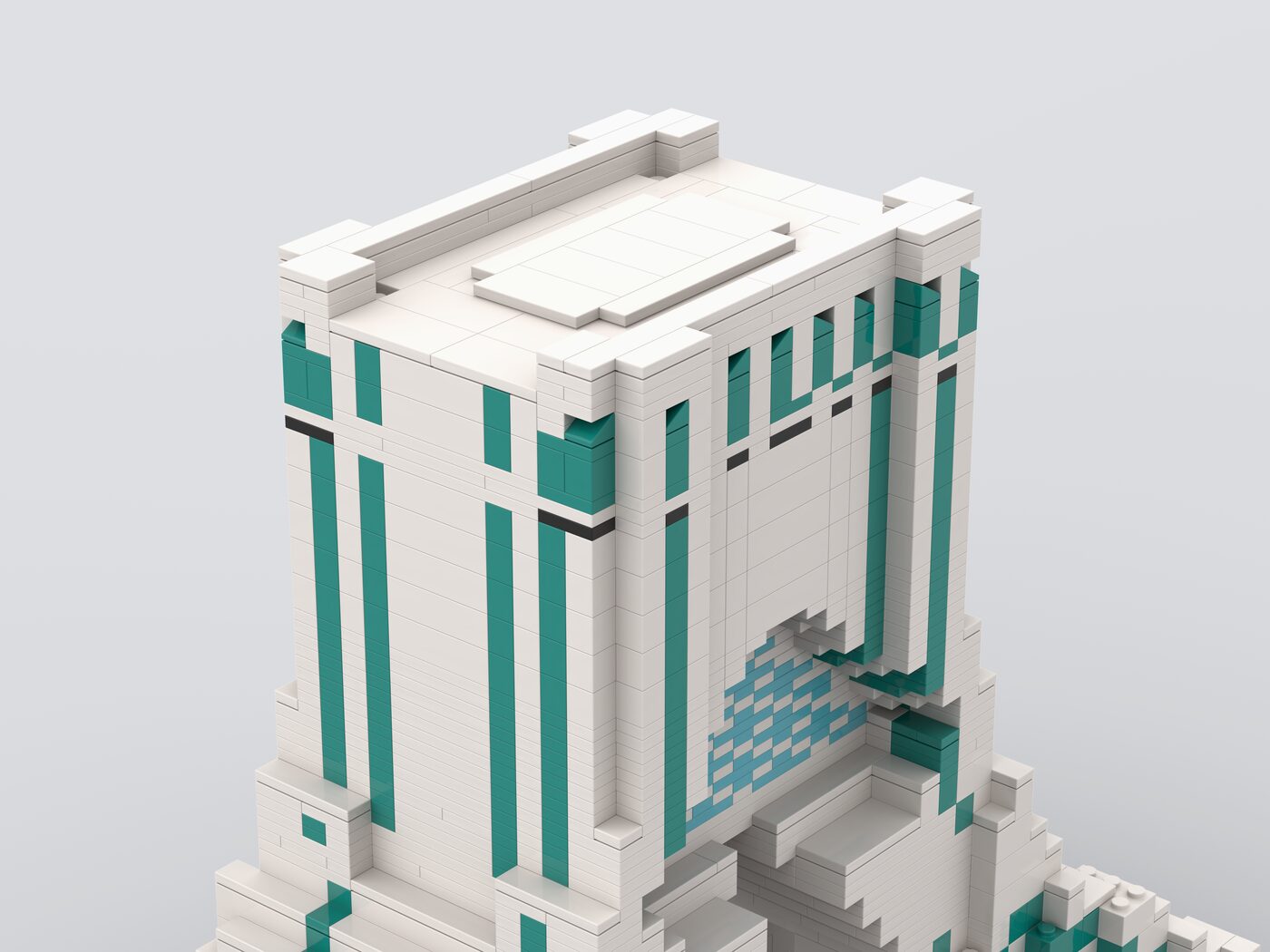
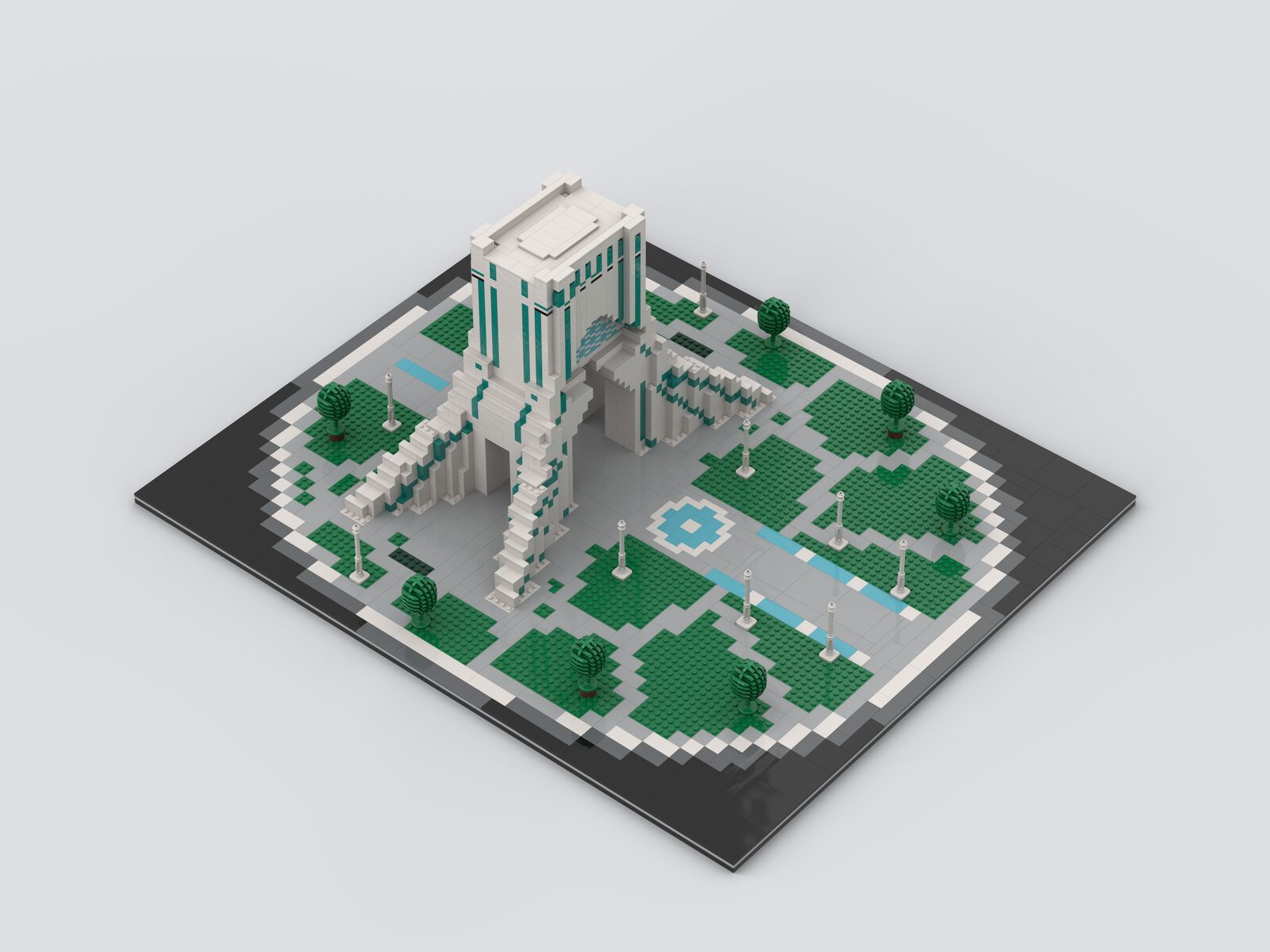
Completed in 1971, clad in thousands of hand-cut blocks of white marble from the quarries near Isfahan, it was named Shahyad — "memorial of the kings" — and opened as the ceremonial gate of Tehran. Landing at Mehrabad, it is the first thing a traveller sees: the city introduces itself with this tower.
1979 — Azadi
Then history walked through it. In 1979 the square filled with more than a million people, and the tower was renamed Azadi — "Freedom". It has kept both names ever since, the way a family keeps both a birth name and the name everyone actually uses.
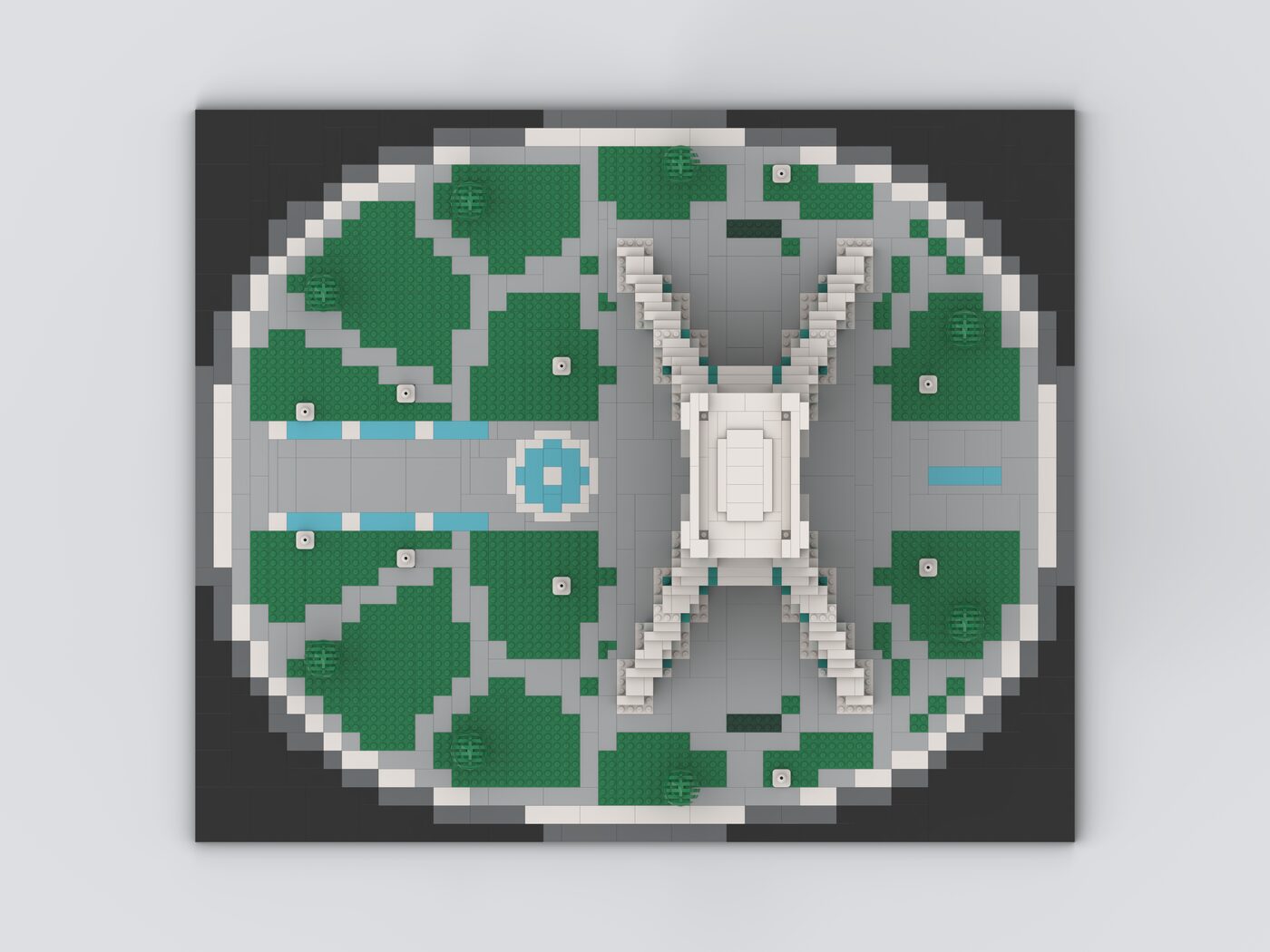
Every era since has gathered beneath it — celebrations, mournings, protests, new year crowds. Governments change; the tower stays. It belongs to no decade and to everyone, which is why Iranians abroad keep its picture on their walls: it is the city itself, distilled to one shape.
Whoever you are, wherever you stand — the tower is where Iran meets itself.
از تخت جمشید تا تهران، داستان ادامه دارد — آجر به آجر.
From Persepolis to Tehran, the story continues — brick by brick.